


Backed by us. Trusted by you.
Victory isn't given. It's earned.
We build our own instruments and carry the pro audio and video brands we trust, for everyone from first-timers to working pros, from your garage to the big stage. Started in 2017.
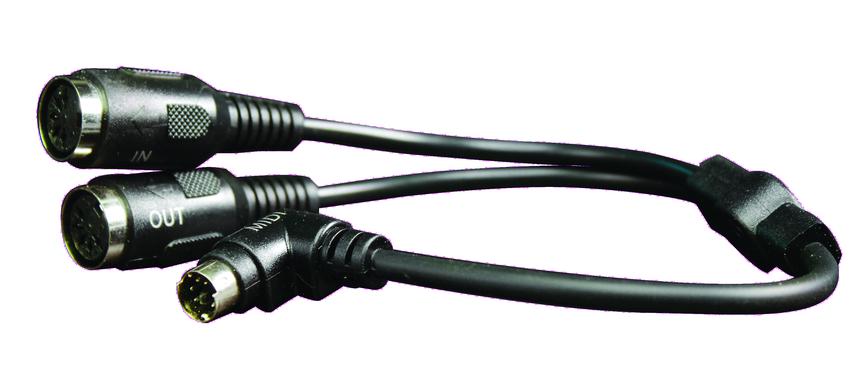
BeatBuddy MIDI Sync Breakout Cable is a breakout cable that converts the BeatBuddy's PS/2 MIDI Sync port to full size 5 pin MIDI IN and OUT. Without it the sync port is unusable with standard MIDI gear, so this is the piece that connects a BeatBuddy to loopers and effects that expect ordinary MIDI connectors.
The cable that turns a proprietary port into a normal one.
The BeatBuddy carries its MIDI sync on a PS/2 style connector to save space on the chassis. Nothing else in a normal rig uses that connector, so out of the box the sync capability is stranded.
This breakout splits it into standard 5 pin MIDI IN and OUT. With that in place the BeatBuddy can drive MIDI-based loopers and effects in sync, or follow another device's clock, which turns the pedal from a standalone drum machine into the timing centre of a performance rig.
At a Glance
| Brand | Singular Sound |
|---|---|
| Type | MIDI breakout cable |
| Device end | PS/2 style MIDI Sync port |
| Output | Full size 5 pin MIDI IN and OUT |
| Use | MIDI sync with loopers and effects |
| Compatibility | BeatBuddy |
Why Do I Need a Breakout Cable at All?
The BeatBuddy's MIDI sync port uses a PS/2 style connector to save chassis space. Standard MIDI gear uses 5 pin DIN. This cable converts between the two, which is the only way to reach the sync feature with ordinary equipment.
What Can I Sync to the BeatBuddy?
MIDI-based loopers and effects. With sync running, the BeatBuddy can drive the timing of the whole rig or follow another device's clock.
Does It Give Both MIDI In and Out?
Yes. The cable breaks out to full size 5 pin MIDI IN and MIDI OUT, so the BeatBuddy can send clock and receive it.
Why Singular Sound
Singular Sound started with a single idea: put a real drummer's timing and phrasing into a stompbox a solo player can operate with one foot. The original BeatBuddy was funded on Kickstarter in 2014 and the company has stayed narrow since, building the BeatBuddy line, the Aeros looper, the MIDI Maestro and the SuperSwitch as one connected system rather than a scattered catalogue. The products sync to each other over MIDI and share a content library, which is why solo performers and worship musicians tend to end up with more than one of them.